Posterity Log
For the future reckoning.
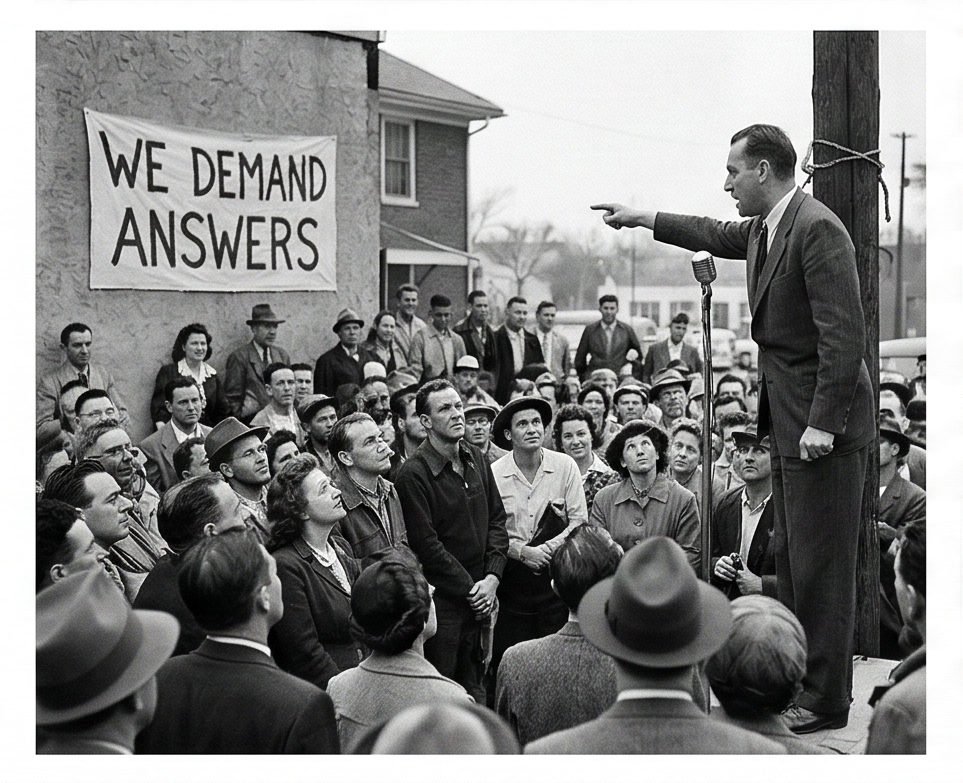
Posterity Log is designed to protect reporters, subjects, and bystanders while preserving historical accountability — a record of what it felt like to live through what we hope will turn out to be only a brief experiment in authoritarianism in the United States.
But no system can promise perfect anonymity, so only include your name or identifying details in your report if you're comfortable with that information being available to trusted investigators, likely within a few years but certainly not before the end of the Trump presidency, and to the public in 2054.

Posterity Log is designed specifically to avoid real-time reputational harm. Submissions are not public accusations. They are unverified reports, and they remain private unless and until circumstances make responsible release to trusted investigators possible.
Until public release in 2054, submissions are not public, not searchable, and not visible to employers, media, or the general public.
The truth matters — but timing can be everything.
Posterity Log is designed to preserve contemporaneous reports about who supported democratic norms, and who supported authoritarianism, during the 47th Trump Presidency.
The archive will be released in two stages:
Posterity Log will not release any data until Trump's term as President has ended, and Posterity Log determines that bodies such as congressional committees and arms of the Department of Justice have again become capable of handling sensitive information responsibly. Posterity Log will consult with bodies such as the American Civil Liberties Union in making this determination. Even when the repository is provided to investigators, the vast majority of submissions will never be relevant to investigators, and, in fact, never be seen by a human. It is near certain that investigators will review the archive with AI to identify submissions that are suitable intelligence tips to use as a basis for further investigation.
Posterity Log will only provide the archive to a trusted investigative body if we receive appropriate reassurances about their use of the information for investigative purposes only, and that it will not be publicly released.


Releasing allegations in real time risks retaliation against reporters and unfair reputational harm to those named in untested claims.
The delayed release helps ensure that:
Posterity Log does not determine guilt, innocence, or wrongdoing. It preserves a record.
Any consequences — legal, historical, or moral — depend on what can later be independently established.
The record doesn't write itself. Are you ready to contribute your story?